
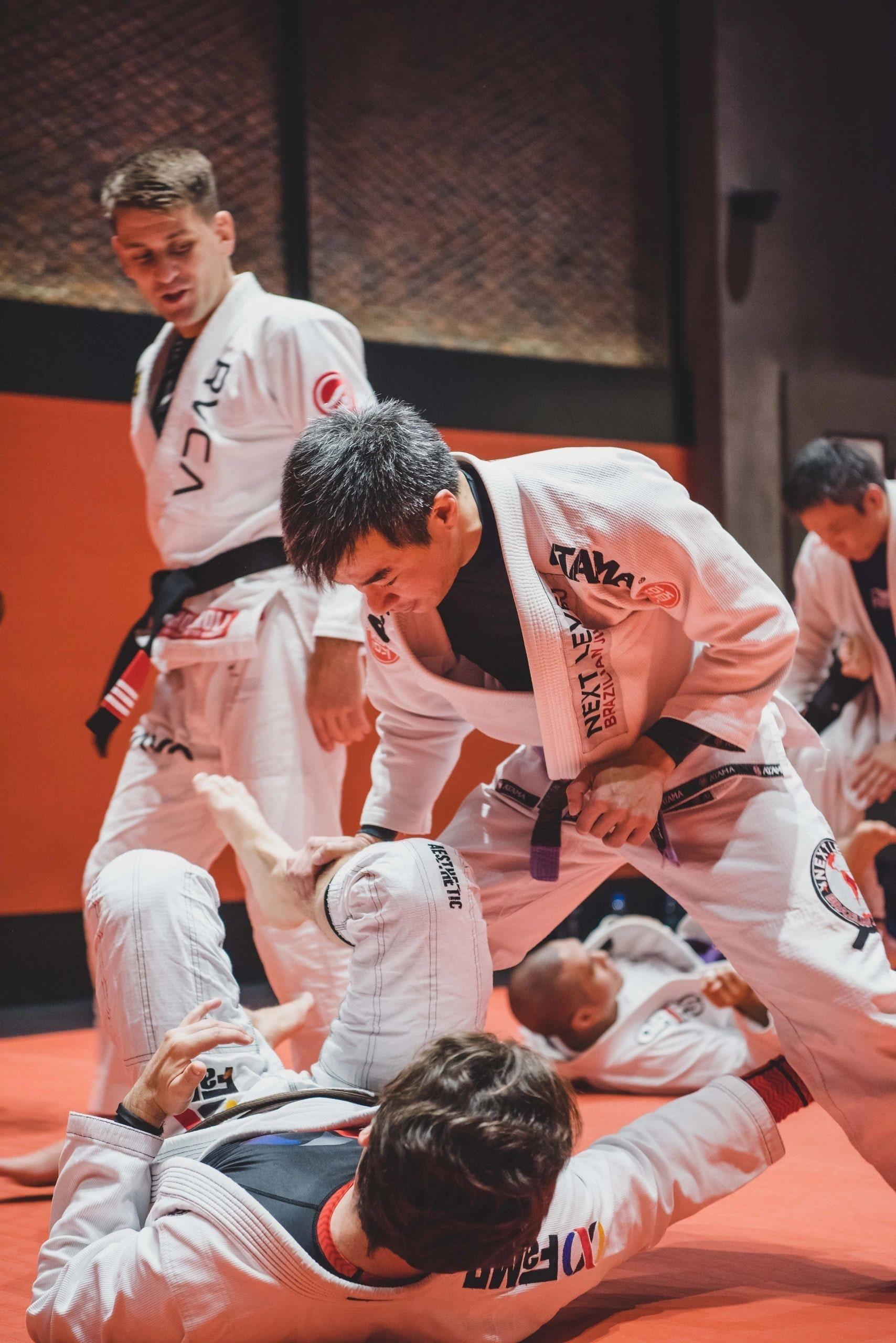
When I embarked on my Brazilian Jiu-Jitsu (BJJ) journey in 2012, I couldn't have predicted how transformative it would be. What began as an exploration of a martial art quickly morphed into a comprehensive lesson in personal growth, discipline, and self-discovery. Looking back at my time as a purple belt, I reflect not just in terms of techniques learned but how each belt level is a stage, with its own purpose and set of lessons that contributed to my evolution as a practitioner and individual.
The White Belt: Foundations and Fundamentals
Contrary to many, my tenure as a white belt was brief—lasting only six months before being promoted to blue belt. This acceleration, while flattering, left me feeling unprepared and thrust into a realm I didn't feel ready to navigate. In retrospect, the white belt phase was meant to introduce me to the etiquette, rules, and rich history of BJJ. It was a time to grasp the major positions, understand the basic submissions, sweeps, and defenses, and, most importantly, to learn how to learn.
Looking back, I see the white belt phase as foundational, laying down the ethos and respect for the art that would guide my entire BJJ journey. It was about absorbing the culture of BJJ, understanding its depth, and beginning to see the vast landscape of knowledge that lay ahead.
The Blue Belt: Expansion and Exploration
As a blue belt, I delved deeper into the technical aspects of BJJ. This phase was akin to learning the vocabulary of a new language. Techniques became words, positions turned into sentences, and sequences started to form paragraphs of combat strategy. Over three years at this level, I expanded my knowledge base, learning how to string techniques together in a more fluid and dynamic manner.
The blue belt phase was marked by exploration. I was encouraged to try new techniques, learn from failures, and begin to understand the interconnectedness of movements. This period was critical in developing a more strategic approach to rolling, thinking several moves ahead rather than reacting to the immediate challenge.
The Purple Belt: The Rolling Stage
Achieving my purple belt marked a significant shift in my BJJ journey. It was less about accumulating new techniques and more about refining and adapting what I had learned to fit my personal style. If the blue belt phase was about learning the language, the purple belt phase allowed me to write cohesively in my own style with it.
Rolling became a canvas for experimentation, a way to test and adapt techniques against various partners and styles. It was a time to refine my submissions, making them more effective and suited to my physical and mental game. The purple belt phase encouraged me to find my voice within the art, to express myself through my rolls, and to engage in deeper, more complex conversations on the mat.
Finding Purpose at Each Stage
Each belt level in BJJ serves a unique purpose in a practitioner's development. The journey from white to purple belt taught me that the essence of BJJ lies not just in the techniques but in the continuous process of learning, adapting, and personalizing. It's about finding the purpose of each phase of your journey and structuring your training to maximize growth during that time.
As I continue my path in BJJ, I'm reminded that the journey is as much about the internal transformations as it is about the external achievements. The belts are milestones, yes, but the true measure of progress is the depth of understanding, the breadth of knowledge, and the personal style that emerges from the crucible of training.
-Alex
Start with the Principles
Our conceptual curriculum — fifteen principles written by the SHBJJ coaches, in the order we teach them.
Read in order