
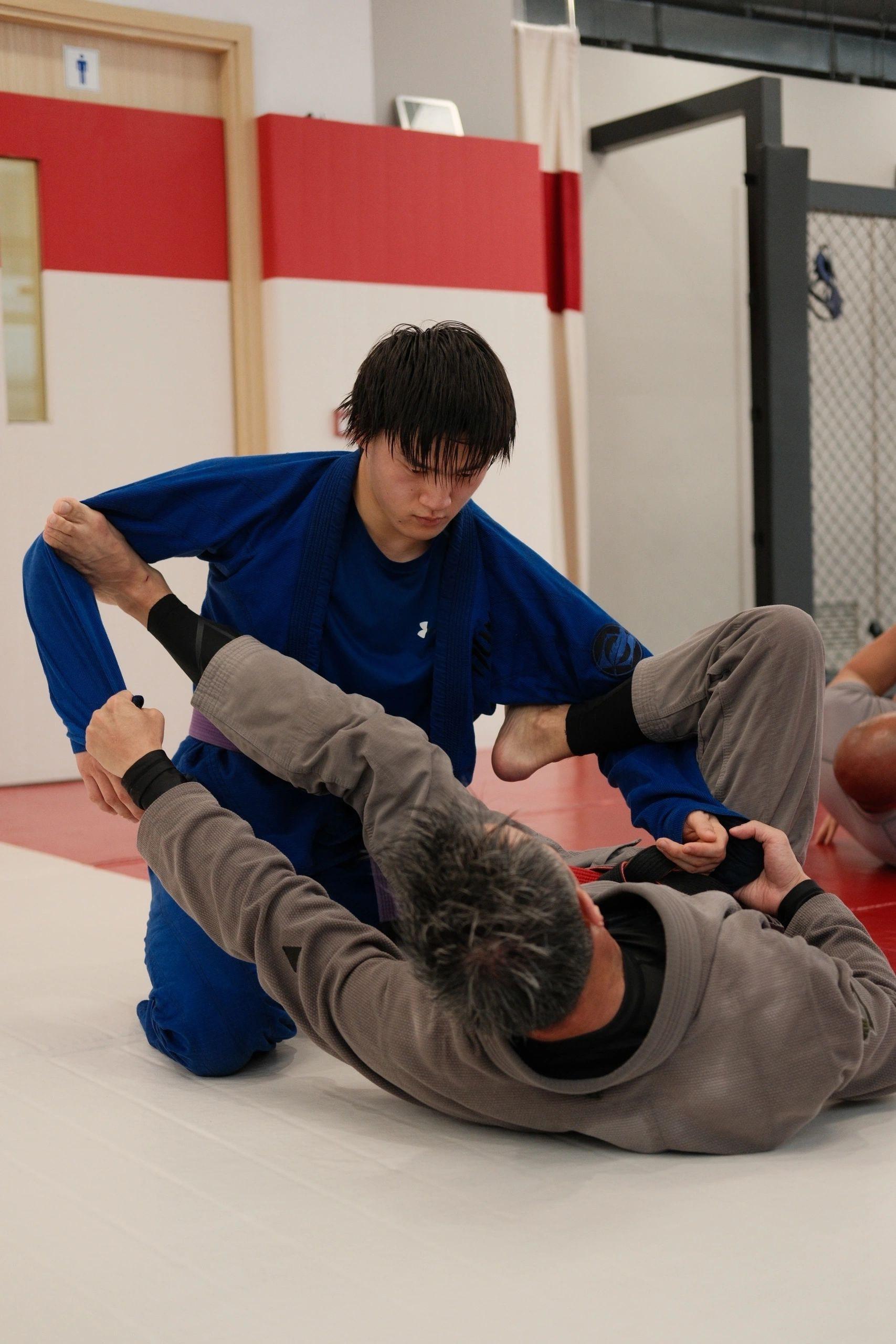
Distance is one of the most fundamental yet often overlooked principles in Jiu-Jitsu. The ability to manage space effectively determines whether you can attack, defend, or neutralize your opponent's techniques. In striking arts, distance is critical to avoid punches and kicks, but in grappling, it plays an equally vital role. Whether you are trying to keep an opponent at bay, close the gap for a takedown, or control them on the ground, understanding distance can give you a significant advantage. The famous saying, "Whoever manages the distance, manages the damage," applies to both self-defense and competitive Jiu-Jitsu.
Distance control is essential in every phase of a fight. In stand-up exchanges, maintaining the right range can keep you safe from takedown attempts or allow you to set up your own entries. In guard, understanding how far or close you need to be can dictate whether your opponent can pass or if you can attack with sweeps and submissions. Even in escapes, distance plays a key role—shrimping away from an opponent in side control or framing against a mount requires the right amount of space to create an opportunity for movement. Too much distance gives your opponent the freedom to move and reset; too little distance allows them to smother and control you.
A major aspect of distance control is knowing how to disrupt your opponent's optimal range. Every technique has an ideal distance for execution. A triangle choke, for example, requires close-range entanglement, while a guard pass like the torreando requires space to create angles. If you understand the distance your opponent needs, you can actively prevent them from achieving it. This defensive application of the distance principle can neutralize stronger, more aggressive opponents by keeping them from operating within their comfort zone.
To develop better distance control, focus on movement drills that emphasize range awareness. Practice managing space with your guard retention, keeping opponents at the end of your frames, and recognizing when to close the gap for attacks. Pay attention to transitions—when passing guard, use pressure to collapse space and deny movement, and when escaping, use hip movement and frames to create the room you need to recover. Developing a sense of distance takes time, but the more aware you become of how space affects the fight, the more control you will have over every exchange.
Like many Jiu-Jitsu principles, distance management extends beyond the mats. In life, understanding when to keep things at arm's length and when to close the gap is essential in relationships, business, and decision-making. Giving yourself space to think, reset, or adapt to a situation can be just as valuable as knowing when to take immediate action. Just as in Jiu-Jitsu, controlling distance in life is about balance—knowing when to engage and when to step back.
Mastering the principle of distance is a game-changer in Jiu-Jitsu. Whether you're working on guard retention, takedowns, or submissions, managing space effectively will allow you to dictate the pace of the fight. Try to be aware of distance management during your next session on the mats!
Alex