
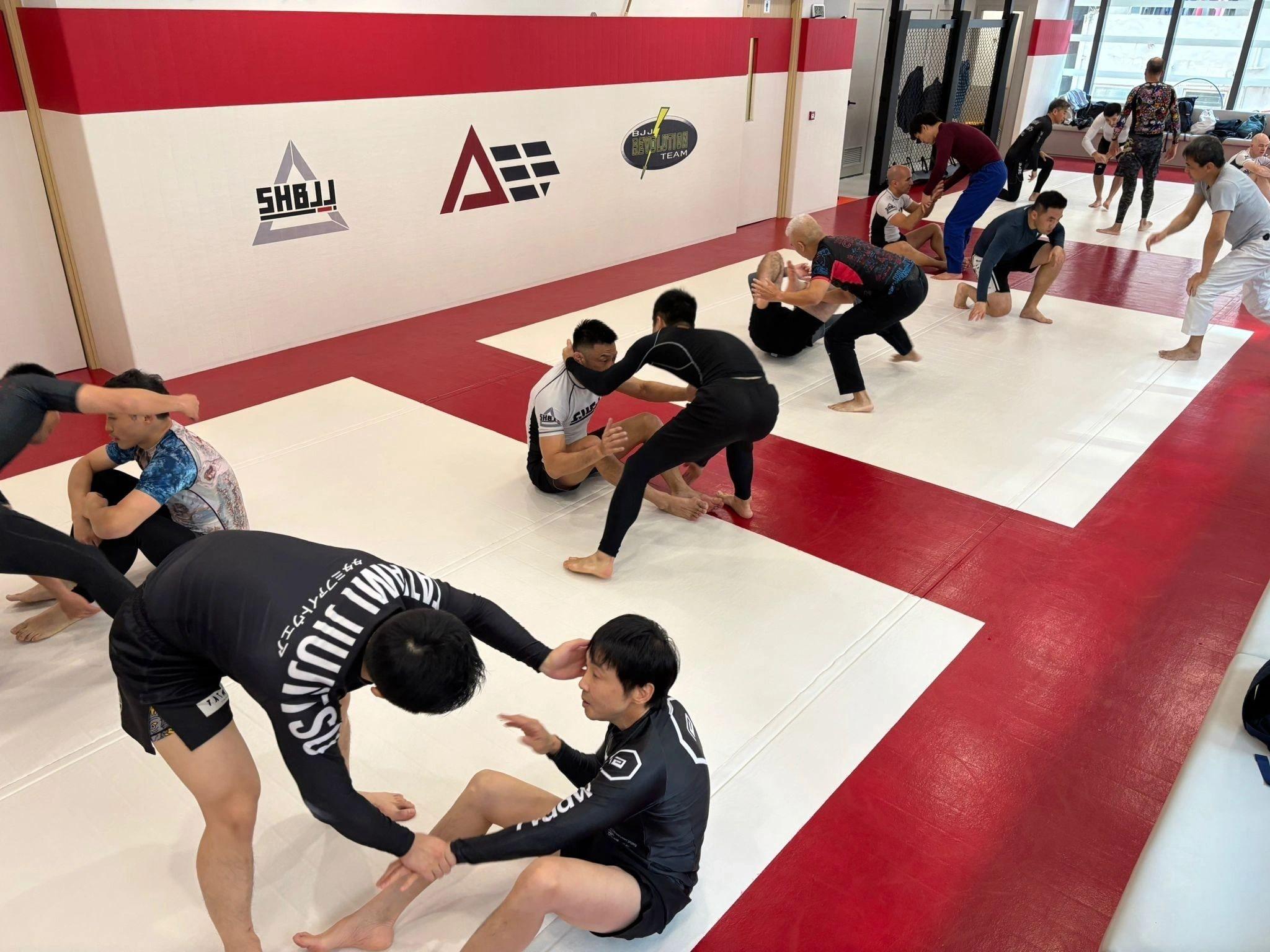
Connection is often referred to as the "alphabet" of Jiu-Jitsu—it's the foundation upon which all techniques and movements are built. Whether you're a beginner or a seasoned practitioner, understanding and mastering the concept of connection can unlock new levels of efficiency, control, and strategy in your game.
In Jiu-Jitsu, connection refers to the physical and strategic link between you, your opponent, and the ground. It is actualised through a combination of pushes, pulls, and pressure—often facilitated by gravity. These connections serve three main purposes:
- Prevent Movement
- Promote Movement
- Predict Movement
For example, when playing guard, maintaining proper grips and positioning your legs ensures a strong connection that can prevent your opponent from passing while setting up submissions or sweeps.
Without connection, even the most technical moves lose their effectiveness. Connection allows you to control your opponent, enhance energy efficiency, and improve timing and sensitivity. By anchoring your body to your opponents', you limit their mobility and dictate the pace of the exchange. Proper connection relies on skeletal alignment and leverage, reducing the need for brute strength. It also allows you to "feel" your opponent's movements, anticipating and countering their actions.
Connection can be applied in various scenarios. In guard work, strong grips and leg placement maintain control, making it difficult for your opponent to break free. Creating frames between the ground and your opponent when applying guard, you increase your strength, so even a larger person will have time passing your guard. The strength of these frames can only be transmitted to the top player through the right connections.
When pressure passing, connecting your weight to your opponent's body amplifies control and forces reactions. Gravity is amplified through application of pressure through connections, and one can feel much heavier than one's actual weight when connected properly.
Similarly, tighter connection ensures more effective submissions, such as in a properly executed arm bar. Incorrect connections, loose connections, or a lack of connection make it easier for an opponent to escape a submission attempt, or make the submission itself inefficient, requiring more brute force to complete.
To master connection, focus on strategies like drilling push and pull mechanics, improving pressure management, and grappling with intent to ensure every grip, frame, and hook serves a purpose.
Interestingly, the Connection principle doesn't just apply to Jiu-Jitsu; it's a life skill. It teaches the importance of being present and maintaining strong relationships, whether personal or professional. By fostering meaningful connections, you create a foundation for success in all areas of life. Awareness of connections are key to helping improve them.
Mastering connection is an ongoing process, but it's a fundamental skill that transforms your Jiu-Jitsu game. Whether you're looking to prevent, predict, or promote movement, connection is the starting point for all progress on the mats. As you refine this principle, you'll notice improvements not only in your technical execution but also in your overall confidence and strategy.
Are you ready to build stronger connections in your Jiu-Jitsu journey this year? We are looking forward to to exploring more of these key principles with each of you on the mats!
-Alex